
SIM Spotlight: Lamaka Opa on Standards, Service, and the Next Phase of IT Leadership
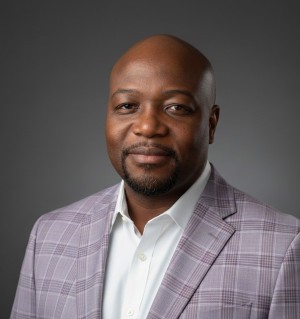
Lamaka Opa, Columbia University, Assistant Director, Information Technology and Faculty Associate, School of Professional Studies
Background and Motivation
I have always been a natural problem solver with a deep-seated interest in helping others; technology provides the perfect platform to do both. As I mastered systems engineering, I found myself instinctively teaching and mentoring my peers to ensure our team’s collective success. This organic transition into mentorship led me to pursue leadership roles. To support this growth, I invested in professional training in areas such as Project Management, ITIL, Cybersecurity and GRC, eventually earning a Master of Science in Technology Management to bridge the gap between technical expertise and strategic leadership.
Mentors, Principles, and the Leadership Pillars
I wouldn’t be where I am today without the unselfish professionals who paved the way for me. I’ve been fortunate to have mentors who not only opened doors but also guided me through the complexities of this field. Many of them remain vital resources for me today, and I continue to prioritize these growth-oriented relationships through my involvement with SIM. From these mentors, I’ve adopted three core pillars for my own leadership style: - Relentless Curiosity: The drive to always master new skills, which fueled my pursuit of various credentials. - Generosity: The commitment to give back to my team, mentor students and young engineers, and stay active within the professional community. - Humility: The awareness that no matter how much expertise I gain, there is always something to learn from those around me. These influences are exactly why I prioritize mentoring my peers, young engineers, and students today. My goal is to provide that same "open door" and guidance for others that was so generously provided for me.
Strategic Scope
Beyond my title, the scope of my role is focused on the pursuit of excellence through three main pillars: continuous professional development, digital transformation, and the rigorous adoption of industry standards. A defining moment in my career occurred during the onset of the pandemic. Having recently started in my current position, I was immediately faced with the challenge of supporting a workforce that shifted overnight to remote and hybrid models. I quickly identified critical gaps: a lack of formal remote-work protocols and significant training needs within my own team. There was no patching the problems, I took a strategic approach to ensure long-term stability: - Capacity Building: I immediately enrolled my team in targeted training to fill skill gaps and ensure we could support emerging technologies effectively. - Process Standardization: We developed and documented formal protocols for remote access and security, moving the organization away from ad-hoc fixes toward a culture of documentation. - Digital Transformation: We accelerated the adoption of cloud-based collaborative tools, ensuring our users remained productive regardless of their location. This experience served as a catalyst for our broader adoption of industry standards. It proved that digital transformation is the right combination of technology, people and processes.
Working Style and Operating Principles
While I don't follow a rigid daily routine, I operate by a set of non-negotiable core principles, the most important being: "Whatever you do, work at it with all your heart, as working for the Lord, not for human masters." - Colossians 3:23. In a demanding IT leadership role, the pressure to take shortcuts is constant. Rooting my work in this biblical principle, helps me maintain high standards. My integrity is directly tied to how I treat people and handle business; I strive to provide the same level of attention, transparency, and respect to everyone, from the Executive VP to the intern. I believe that leadership is a service, and every individual deserves to be heard and valued. Because my team knows that my word is my bond and that I value every individual’s contribution regardless of their title, communication is faster and projects move more efficiently.
Growth and Professional Range
I am very curious and feel the need to always learn. I buy a lot of books from technical literature and non-fiction to novels. Everyday, I listen to podcasts, and debates on the economy, politics, and technology. I enjoy being active and network with SIM, Columbia University and other organizations. Reading and listening to diverse debates sharpens my ability to understand different perspectives. This is vital when I am mediating between technical teams and executive leadership. Staying informed on global trends allows me to "see around corners." It helps me understand high level decisions, and the impact of macro-pressures like economic shifts or new data regulations, or politics.
Leadership Evolution
My leadership style has evolved from directing technical execution to engineering organizational resilience. This shift occurred in three key stages: 1 - From "Problem Solver" to "Capacity Builder": Early in my career, my leadership was centered on my own technical mastery. I was reliable and dependable; I was the guy who built and fixed the system. As my scope grew, I realized that true leadership is about scalability. I shifted my focus to mentoring and "sharpening the saw" for my team. My goal transitioned from solving the problem myself to building a team that had the training and autonomy to solve it more efficiently than I could. 2 - From Team Management to Strategic Foresight: As my responsibilities expanded, I realized that building a great team was only half the battle; that team needed to be aligned with where the industry was headed. I moved from managing IT uptime to focusing on Strategic Foresight. This meant educating myself to stay ahead of the curve, ensuring that our adoption of new technologies and standards was proactive rather than reactive. 3 - From Authority to Servant Leadership: I have anchored my style in "Universal Respect". I have learned that strategy only succeeds when there is total trust. Whether I am collaborating with an Executive VP or an intern, I lead with the same transparency and integrity. I no longer lead by technical authority, but by serving the organization’s mission, ensuring our technology is a strategic engine for growth, not just a back-office function.
Team and Culture
My philosophy is built on the belief that a high-performing team is not a collection of individuals, but a single, resilient unit. I achieve this by balancing human needs with strategic efficiency. I apply Maslow’s Hierarchy of Needs to the workplace. Before a team can innovate (Self-Actualization), they must feel secure and valued (Psychological Safety and Esteem). I build rapport by showing genuine interest in individuals. By understanding their personal "WHY" and their professional goals, I can align their growth with the organization’s needs. When people feel seen as humans first. they become committed to the mission. I rely on the Pareto Principle (80/20 Rule) to maintain team focus and growth. Identifying the 20% of my team that drives 80% of the organizational value helps me prevent burnouts and ensures the team is always working strategically. I rely on those "high achievers" to help train and transform the rest of the group. To break down organizational silos, we focus on managing expectations through dialogue. We don't just provide technology; we foster a shared understanding of how technology drives the business. We introduce our users to the fundamentals of ITSM and IT Project Management. This empowers them to understand the "WHY" behind our processes and helps align their requests with business priorities. We are open about our SLAs (Service Level Agreements) and KPIs (Key Performance Indicators). By sharing these metrics, and having an open dialogue about them, we build trust and eliminate the "black box" perception of IT. I instill in my team that IT does not exist for itself; we exist to serve the whole organization. We never say, "That’s not an IT problem." Instead, we ask, "How can we help the organization succeed?" This shift in language reduces frictions and turns IT into a strategic partner.
Advice He’d Give His Younger Self
I would tell my younger self:" begin with knowing your WHY". In other terms, take the time to identify the reason why you do it, want to do it ... first. While the various paths I took helped shape my personality and career, I now realize that I find fulfillment in a life dedicated to serving.
Career Milestones and Recognition
My commitment to excellence, capacity building, and service has recently been validated by two of the highest honors of my career: Academic Position at Columbia University (2024): After graduating from Columbia University’s Master of Science in Technology Management program a few years ago, I was recruited back as a Faculty Associate. Columbia has access to an incredible pool of global talent, so being selected to help shape the next generation of technology leaders is an immense honor. This role allows me to practice servant leadership at the highest academic level, bridging the gap between theoretical strategy and real-world execution. Keynote Speaker at IPSSI School of Engineering, Paris (2025): I was invited back to Paris to deliver the keynote address for the 25th anniversary graduation of my first alma mater, IPSSI School of Engineering. As one of the institution's early graduates, this was a profound full-circle moment. It was an opportunity to demonstrate to the new generation that a foundation in engineering, when combined with a life dedicated to service, creates more than just a successful professional; it creates a respectable member of society, an instructor in one of the world's finest academic institutions, and a recognized Ambassador of French Excellence.
Industry Outlook: From IT Management to AI Orchestration
In the next 5-10 years, AI will present the biggest challenge and opportunity. First, the transition from IT Management to AI Orchestration with the use of AI agents; these agents won't just alert us to a system failure; they will diagnose the root cause, provision a sandbox to test a fix, and deploy the solution before a human even logs on. Next, thanks to autonomous systems, junior engineers will be able to perform senior-level tasks with the guidance of AI-driven tools. I believe that there will be challenges in governance and data integrity. The industry will have to ensure that autonomous agents follow industry standards and organizational ethics. In this new landscape, protecting the integrity of the data that feeds the AI becomes more vital than protecting the physical hardware. If the data is flawed, the leadership provided by the AI will be flawed. Ultimately, the scope of IT leadership is evolving and focusing on governing the intelligence that powers the business.
Why SIM NY Metro
I was drawn to SIM NY Metro to connect with a community of like-minded technology professionals who share a commitment to excellence and leadership. SIM offers a unique platform to move beyond the "how" of technology and master the "why" of executive leadership. I value the opportunity to engage in high-level dialogue with peers who are navigating similar macro-pressures. By networking within the NY Metro chapter, I gain access to a wealth of collective experience regarding industry standards and digital transformation. Finally, consistent with my belief in "sharpening the saw," I joined SIM to both learn from seasoned veterans and give back to the next generation of IT leaders. SIM members are really cool and fun to be around!
Outreach, Mentorship, and the Pipeline Question
I am currently honored to mentor a college student through SIM, and my goal is to help him grow not just as a future IT professional, but as a well-rounded man of integrity. The Outreach Committee’s current work includes sponsoring students, providing professional attire, and coaching on interview skills. However, I believe our greatest contribution lies in human capital. We have an incredible density of affluent, experienced members. If every member committed to mentoring just one college student, we would fundamentally reshape the technology landscape in New York City. We wouldn't just be filling jobs; we would be building a pipeline of leaders who value both technical excellence and character. For me, the success of SIM should be measured not just by our networking events, but by the strength and diversity of the young leaders we pull up behind us.
Collaboration and Support
I have been deeply enriched by the relationships I’ve built within SIM. I am incredibly grateful to the members who have met with me privately to offer career advice, share strategic resources, and extend their friendship. These unselfish professionals have had a positive impact in my life. However, true collaboration is about strengthening the collective. To support the mission of SIM and our broader community, I would suggest three key areas of focus: - I encourage every SIM member to join a committee. Our strategic acumen as a chapter is fueled by active participation, not just attendance. It is the best way to move from "networking" to "partnership." - We should look for more ways to volunteer with local organizations. By sharing our expertise with NY Metro non-profits and schools, we can help bridge the digital divide and foster new talent. - I would love to see more virtual events that allow those who cannot easily attend in-person -due to travel, location, or demanding roles—to stay connected. Inclusivity is what makes our collective intelligence stronger. I want to ensure that the "open door" I walked through remains wide open for everyone else.
Outside of Work
People are often surprised to learn that despite a 25-year career in tech, I am likely the only 'geek' on the planet who has never seen a single Star Wars movie - though I’ve played almost all the games! My real passion lies in capturing the world through a lens. I’m an avid photographer and videographer; I always travel with a drone, a 360-degree camera, and an action cam in my bag. I also consider myself a global citizen. I’ve lived on three different continents and can hold basic conversations in eight languages. I’m a lifelong learner, so if you see me on my phone, there’s a good chance I’m on Duolingo trying to add a ninth and tenth!